
Categories
Uncategorized

Real estate reading

What renting really entails

Traditional rental or short-term rental: understand the obligations before buying

Buying a property to rent out isn't just about estimating rent or return on investment. Choosing the right rental method has legal, administrative, and practical implications for the owner. Traditional rentals and short-term rentals are subject to different rules and carry different responsibilities. Understanding this difference from the outset is essential for a successful investment.

Traditional rental: what this implies for the owner

A standard rental agreement refers to a property rented as a primary residence, whether furnished or unfurnished. The landlord operates within a rental relationship governed by a stable legal framework. The property must meet standards of decency and safety. It must be suitable for habitation, with functional equipment, compliant electrical wiring, and adequate ventilation.

Depending on the municipality, renting out a property may be subject to specific local regulations, such as a rental permit. In this case, authorization or a declaration may be required before or after the lease is signed. Traditional rentals also involve a long-term commitment. The lease is structured, rent review rules are strict, and tenant protection is robust. In return, management is more predictable and rental stability is often greater.

Short-term furnished rentals: what they actually entail

Short-term furnished rentals refer to accommodation rented for temporary stays, by the night or by the week, without constituting a primary residence. This type of rental is not subject to a rental permit, but it falls under a different, often more restrictive, legal framework.

Depending on the municipality, the owner may be required to register the property with the town hall, obtain specific authorization, adhere to a maximum number of nights booked, or change the property's use. In some cities, these regulations can severely restrict or even prohibit short-term rentals. Management is more intensive, involving frequent check-ins and check-outs, regular maintenance, and rigorous organization. Profitability can be attractive, but it depends directly on local regulations and the owner's commitment.


Two very different bond leasing methods

Traditional rentals rely primarily on the suitability of the property and the stability of the landlord-tenant relationship. Short-term rentals, on the other hand, depend on obtaining the necessary authorization to operate the property in this way. A property perfectly suited for long-term rentals may be prohibited for short-term rentals. Conversely, a property attractive to tourists may not be suitable for traditional rentals.

That is why the rental method should always be defined before the purchase of the property and not after.


Buying to rent: plan ahead from the start

A secure rental project begins with verifying the applicable regulations in the municipality. Identifying what is permitted, understanding local constraints, and adapting your project accordingly helps avoid administrative roadblocks, penalties, and lost profitability. Planning the operational aspects from the outset is the key to a controlled and sustainable investment.

Conclusion: The Dubach House

Renting out a property is a significant decision that commits the owner far beyond the simple lease agreement. Each project must be carefully considered in light of the property's intended use, its location, and applicable regulations.


At La Maison Dubach, we support rental projects with a comprehensive and rigorous approach. Our role is to anticipate constraints, ensure sound choices, and build coherent, compliant, and sustainable projects.


Because a well-thought-out investment is an investment that lasts.
Categories
Uncategorized

Another way of approaching space

Another way of approaching space

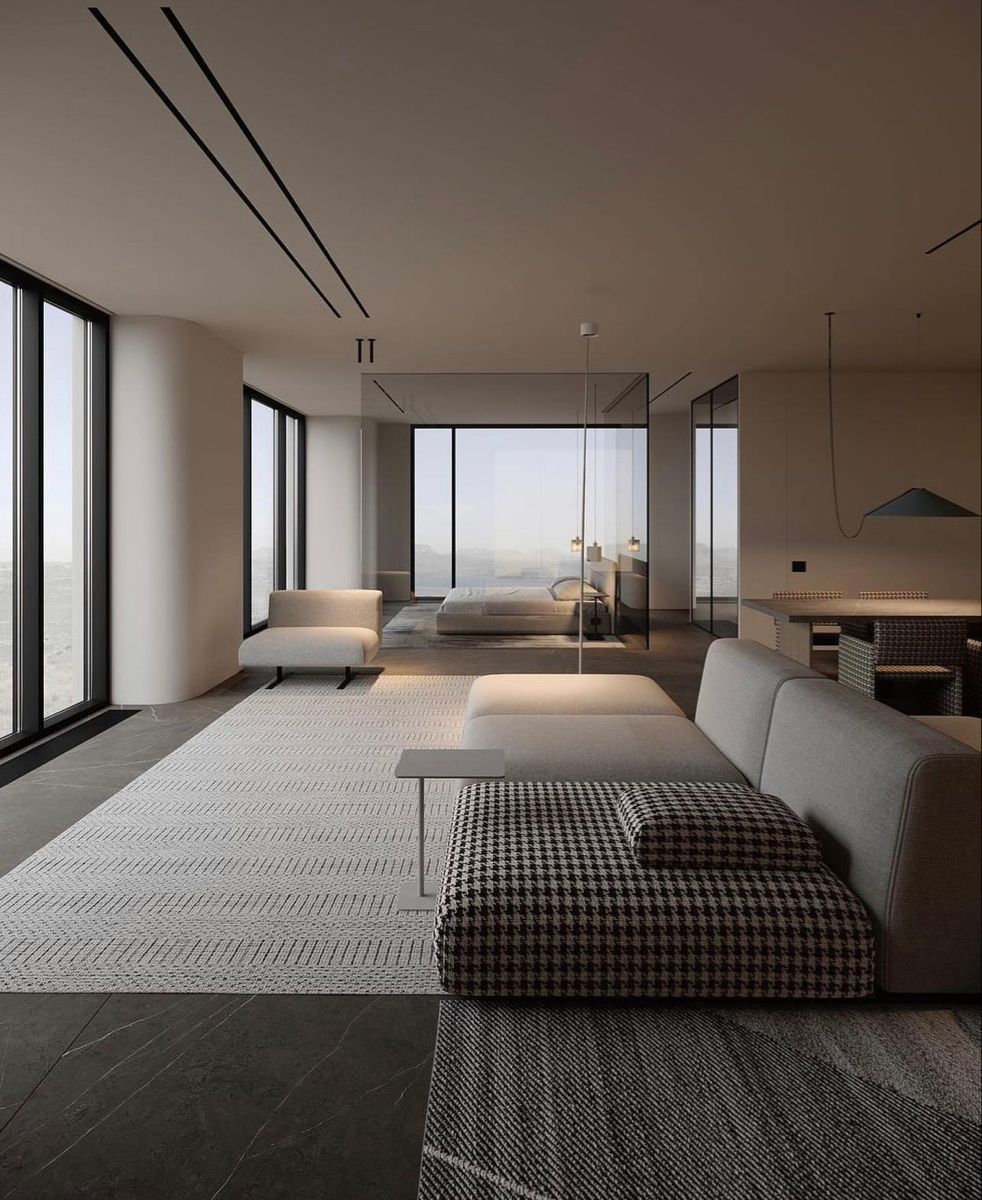
In a world saturated with visual stimuli, this type of space offers a different way of reading.


The spaces are open, the boundaries are subtle, and light flows freely. The architecture is no longer compartmentalized by function, but conceived as a fluid and legible whole, which soothes from the moment you enter.


This approach transforms the way we experience the interior. Movement becomes natural, uses freer and less constrained. The space doesn't dictate a way of being; it adapts to the rhythms of the day. We move seamlessly, with a sense of continuity that makes the whole space more serene.


Reducing the superfluous plays a crucial role. By lightening the visual environment, the eye rests, attention is refocused. Lines, proportions, and materials become more perceptible. Forms gain value through their precision, not their accumulation. Space gains in balance and clarity.


Over time, this type of interior has become more appealing to me.


An interior free of clutter and unnecessary attachments, leaving room for the mind. A clear visual environment, in which it becomes easier to concentrate, reflect, work on projects, but also to relax.


This type of architecture does not seek to please everyone.


It is aimed at those who feel the need for a lighter, calmer space, where the visual essential becomes a true source of well-being and inner freedom.


Categories
Uncategorized

The founder's words

Hold on to your vision


Holding onto one's vision is not a comfortable position.
This is not something that is displayed.
It's something we accept to wear, sometimes alone, often against the grain.


I never liked doing what everyone else did.
This is neither a strategy nor a desire to stand out.
That's my personality.
My way of seeing things, analyzing them, building them.
Very early on, I understood that reproducing an existing model would not be enough for me, even if it worked.


You cannot build your life from the outside.
Neither based on opinions, nor on what is reassuring, nor on what is already validated.
The outside world speaks loudly.
He comments, he advises, he plans.
But all of this remains background noise.

To decide based on this noise is to accept that you will never fully realize your own vision.


When I decided to create my agency, this was already evident.


I didn't want a standard structure.
I didn't want to do things "the right way".
I wanted a project with a clear identity, a precise way of doing things, something that would have real consistency over time.


To achieve this, I made a radical but simple choice:


Listen only to my voice.
Not the reassuring one.
The one that compels.
The one that requires going further than expected.


I quickly understood that a vision cannot be based on intuition alone.
It requires work.
Mastery.
A thorough understanding of each aspect.
Returning to studies in parallel was not a detour.
That was a condition.
The only way, for me, to build something solid, and not just a facade.


This choice is not always understood.


It arouses attention, doubts, and sometimes attempts at correction.
But these reactions rarely address the project itself.
They often talk about the difficulty, for some, in accepting that another path is possible.


With time, consistency does its work.


What has been held back is beginning to show.
What has been worked on is taking shape.
There is this inner pride, calm, almost silent, when you look back.
Not the one who seeks to prove anything.
The one who knows.


Holding onto one's vision is not about resisting the world.


It means not letting yourself be defined by it.
It's about moving forward while staying true to one's way of thinking, building, and deciding.
Even when it's uncomfortable.
Even when it's lonely.


And you, have you ever had a desire, a project, a vision, and chosen to turn it off because the outside was too noisy?

en_GB